• Home
  • About
  • Contact
  • News/Blog
  • Writing
    • Anthologies
    • Work Available Online
    • Stealing Dust
    • Wearing Heels in the Rust Belt
  • Reviews
  • Book Picks
    • Best Collections
  • Favorite Links
    • Favorite Blogs and Websites
    • Literary Journals
    • Nature Websites and Writing
    • Working-Class Resources
  • Work Available Online

Book Recommendations and Reviews

My personal picks!

Read This Book: Quench Your Thirst With Salt by Nicole Walker

3/27/2014

0 Comments

 
Picture
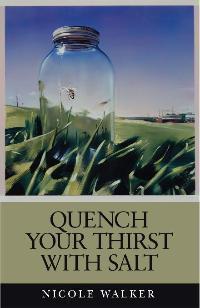
At heart, Nicole Walker is a poet. I knew this as soon as I read five pages of her memoir, Quench Your Thirst With Salt.  I knew this way before I read her bio note and discovered that yes, Walker, had many poetry publications. I knew this as soon as this first paragraph popped out at me: "The fish jumped a ladder built of electricity and concrete. Swimming up the Columbia teaches her a lesson about progress. Even before the dam, the waterfalls would have battered her forefathers. The rocks would have walloped a punch, broken the skin, bruised the flesh."

And so starts Walker's Quench Your Thirst With Salt, a memoir. More specifically, however, this book is a collection of lyrical essays that explore her life growing up in the state of Utah. Every chapter can be read (and perhaps, should be read) as an individual essay.  For instance, one chapter titled "Filtered Water" focuses on the life of the water we use while juxtaposing this life with the author's own life, describing what she knows and doesn't know about her own family history.  In another chapter, she introduces the reader to her father's alcoholism through discussions of the term "superfluidity" and in another chapter she describes her relationship with her own body when she has to have surgery at a young age.    While most of the book focuses on her life in Utah, other chapters venture outside of the state including Nevada, Oregon and Minnesota, all the while aspects of the natural world with her own life.


Readers will find that Walker's book is more of an episodic exploration of her life rather than a straight linear narrative. We don't necessarily find clear beginnings or clear endings; instead, we read thoughtful insights about family relationships and their correlations to the world around us. And, of course, it's easy to get lost (blissfully, so) in the poetic language of Walker's landscapes, whether they are manmade or natural.

You can read more about Quench Your Thirst With Salt on
Nicole Walker's homepage or the website of Zone Three Press.


0 Comments

Prose Poetry Pick: The Rusted City by Rochelle Hurt

3/8/2014

1 Comment

 
Picture
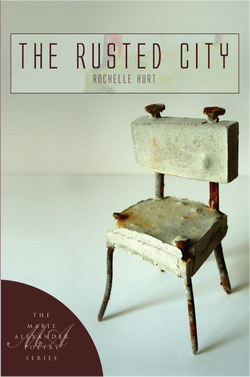
An American Rust Belt City would hardly seem to be the location where a tale of magical realism would take place, but Rochelle Hurt, in her first collection of poetry, The Rusted City, navigates a broken and battered world through elements of fantasy and characters who seemed to have stepped out of a blue-collar fairy tale.

In The Rusted City we are introduced to a family of four whose names are never given and are only described as the smallest sister, the oldest sister, the quiet mother, and the favorite father. Most of this novel-in-verse collection is told from the perspective of the smallest sister who views the world around her in wonderment, although most of what she sees is coated in rust.  For instance, in the opening poem, "The Old Mill" she explains that she knows birds are living in an abandoned mill: "The birds are there, eating the rust from the wings." Certainly, it seems as if these birds are acting as phoenix symbols -- rising from rust as if they are rising from the destruction of fire and ashes.

Although we don't always necessarily see the characters rising from their rusty world, we do see them as hopeful survivors that seem to make the best of their situations. In "The Smallest Sister Decides to Make Herself Red" we see a child who wants to make herself attractive by stringing "corroded washes into a necklace" and coloring her lips with "sanguine river water."  In another poem, "The Oldest Sister Smashes Cans" this same sister learns the art of destruction from her sibling: "Each can lets out a wheeze as it folds into itself, a burst of breath/ that whooshes the rust-laced pollen on the ground."  While many of the poems do feature the smallest sister and her relationship with other characters and the world around her, some let other people speak including poems where the quiet wife takes center stage. For instance, in "Wife Song," the speaker likens her love to "impatient decay" while in the two sentence poem "The Quiet Mother Moves,"  that acts almost like an interlude to the collection, we understand this figure that walks "like breath, and an out of the house. Like a lung, the house empties and fills."  

Yes, we get a strong sense of how the characters are navigating this world of debris, but perhaps the most interesting section of this collection is where the older sister relays the history of their hometown. In the poem, "In the Century of Lunch Pails" she explains that the world was once filled with "the grown and whistle of liquid/aluminum, churning the river to a radium loam" and "coins/inside all the hollowed-out fathers as they walked."  This world of busy factory activity ends, however, and is followed by the sullen stillness of unemployment described in "In the Century of Silence"  when "the plants closed, no/exclamations were heard,/but the city opened with the pink/of a thousand gapemouths, all/of its citizens miming themselves."

Navigating the American Rust Belt through poetry is tricky -- it's easy to fall into clichés  and nostalgia. But Hurt avoids all the rusty overwrought drama and creates a new world from the old by using rust as more than corrosion and damage. In her lyrical poems, she transforms a world that is familiar debris to a place that is beautiful and hopeful.

For more information about The Rusted City, visit Rochelle Hurt's
website.  The Rusted City is part of White Pine Press's Marie Alexander Poetry Series which highlights prose poetry. More can be found about this series here.


1 Comment

Read This Book: The Thing With Feathers by Noah Strycker

2/28/2014

0 Comments

 
Picture
I am a birder by default. When I was a child, I used to sit on the couch in our living room and watch the birds in my mother's birdfeeder, rooting for the Juncos to beat out the Blue Jay bullies. My brothers were both birders, so I learned early the different sparrows and finches that came to feed. Now, I constantly find myself looking at the sky, especially this past month. My section of the world has become part of the Snowy Owl irruption, and every day, on my way to work, I pass by a field where a lone white owl is hanging out on top of a telephone pole. Rumor has it that the Snowy Owls will be heading home soon, so I am going to miss looking for him (or her?! I don't know the difference in sexes when it comes to snowy owls).

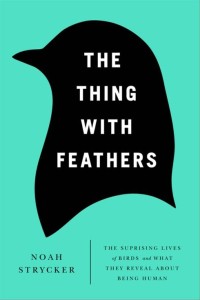
The Thing With Feathers by Noah Strycker is a perfect read for anyone interested in what we have in common with our feathered friends.  Every chapter is devoted to a specific bird and its similarities to humans. For example, in one chapter, we learn the fears of penguins while in another chapter we learn the reverence of magpies (it is believed that magpies actually hold "funerals" for their deceased peers).  Chapters really act as individual essays and don't have to be read in order, so I went right to the section that discussed the Snowy Owl, where I learned about our new white feathered friends.

Still, I found other chapters just as intriguing. My favorite chapter turned out to be  about Strycker's exploration of albatross love.  Of course, as an English professor, the albatross will always be first and foremost, a literary allusion, but Strycker's references to the albatross's life (which is spent mostly in the air) were fascinating.

The Thing With Feathers is Strycker's second book, and even if you don't consider yourself a birder, you will enjoy this collection. Afterall, who hasn't wondered about the fast pace of the hummingbird or how turkey buzzards can stomach the carcass of roadkill?


For more information about Strycker, see his website. For more information about our local Snowy Owl irruption, take a look at the blog hosted by the Roger Tory Peterson Institute in Jamestown, New York.


0 Comments

Winter Poetry Pick: Scrap Iron by Mark Jay Brewin Jr.

2/2/2014

0 Comments

 
Picture
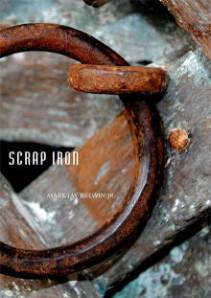
In Scrap Iron, the debut poetry collection by Mark Jay Brewin Jr., he struggles to answer the question, "Can one really go home again?"  The answer is not clear, but his exploration is worth reading. From the flooded farmlands of Southern New Jersey to the island countries of Ireland and New Zealand, we watch as a narrator struggles to negotiate the relationship of personal identity with home and family.

Scrap Iron is divided into three sections. The first section is dedicated to memories of the poet's youth in New Jersey. The narratives detail a hardscrabble life of rust and water and work. The opening poem, which is untitled, acts as a prelude to the collection where the poet describes the landscape around him:  "Water was always the problem surrounding/our rancher anchored to the low end of the acreage--/rain lurched in, ankle-deep pools filled every dip/in the road..."  The narrator goes on to explain that his father "donned his fisherman's rain suit/shoveled sand along the edge to keep street gutters/from overflowing and making our house an island/in a slump of the farmed plain."  The family, meanwhile, hunkers down at home, with a mother taking care of three children and waiting for a husband who, seemingly disappears in the drowned land around them.


What follows this poem is a collection that explores the family's everyday life. My favorite poem is "Scrap Iron" where the narrator tells about finding and collecting scrap metal for extra money. Detailing the landscape, it's easy to see that Brewin knows this world well: "We hunted for steel along flat-bottom train rails -- glass/blanketing the gravel track bed like chicken feed/jimson weed between creosote-steeped timbers/picked over buckled trailers and garbage stacks:/crack pump heads, mower blades, band saws rusted mid-cut." 

Many of the poems detail physical labor and focus on the effects this work has on the body.  In one poem, "So Intricate, So Inconceivably Complex" the narrator explains that his father lost fingers "when he/wedged the index and middle fingers of his left hand in the cogs and gears."  Following the theme of survival which pervades many of the poems in this collection, the reader later learns that he had "to relearn how to grip objects with his left hand, the nerves/too sensitive to touch anything."  In another poem, "Peeling Skin" the narrator tells how he and his sisters  used to peel away "flakes of sunburned skin" from their father's shoulders. Making a game of the ritual, the siblings "had little contests/to see who could pull/the largest piece, the best shape."  Even more than a game, the narrator seems to realize they had a more noble cause: "We tended/him as if we could peel/the mark of hard work from his body." 

Other sections of this collection find the narrator traveling away from New Jersey, both physically and mentally.  In "Working First Shift at the Progresso Soups Factory" the narrator takes a summer job, knowing that after a few months he would walk away from "this calloused glance at another life" to attend college. In other poems, he travels further away.  In "The Island Meditations" the narrator explores the land and culture of New Zealand, and tells his sister over the phone, "I can't tell you/how nice it is to be some place so very different from home." Ironically, throughout most of this particular poem, which actually is composed of a sequence of events and recollections, we find the narrator thinking of home more often than recording the world around him.


Brewin is a master of a narrative poem. Working with the unreliability of human memory, he weaves stories from both history and the rough landscape he knows well.  Readers will be drawn into his stories without ever getting lost in his images of landscapes and people. Indeed, walking away from this collection, you may find yourself wringing rain water from your clothes and looking for rust on your hands and metal splinters in your skin.

Brewin's collection won the Agha Shahid  Ali Prize in poetry, and this book definitely deserves the honor. It's also a collection that leaves me wanting more of Brewin's work and looking forward to his future books.  For more information on Scrap Iron and Mark Jay Brewin, Jr. visit the poet's website


0 Comments

Read This Book: Prairie Silence by Melanie Hoffert

1/19/2014

1 Comment

 
Picture
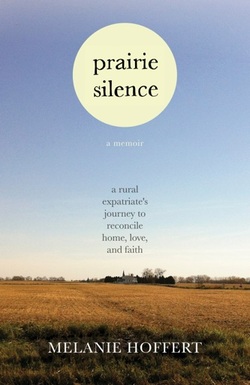
Prairie Silence by Melanie Hoffert is part coming-of-age story and part coming-out story.  The book chronicles Hoffert's journey back home to North Dakota, where she explores both the past and the present in order to reconcile sexuality, religion, love, and family.

The book intertwines Hoffert's current life with her memories of the past growing up on a North Dakota farm.  She gives a name to this confrontation of the past, Prairie Silence, which she describes: "Prairie Silence is -- I have come to believe -- the way that people of the prairie mirror the land with their sturdy, hardworking, fruitful and quiet dispositions. They are committed to each other like the soil is committed to the crop. They are uncomplaining in the way the land dutifully recovers after tornadoes, droughts, and floods destroy a season's harvest. They are humble and quiet, like white prairie grass in the wind. They swallow their problems, their fears, their shames, and their secrets -- figuring that nature will take care of everything, somehow or other. That is, after all, how it works with the crops.  And once a silence has taken hold, whatever it is, it is hard to uproot."   It's this confrontation that is the very conflict in the book. How does one confront a place that doesn't wish to speak out loud?


Hoffert doesn't really find any answers, but she seems to find peace.  And part of this peace is found in the landscape that she describes so beautifully, a world that can deliver stunning sunsets that defy literary clichés or winter storms that seemingly blur the world in wind and white. Having never been to the Dakotas, Hoffert's book didn't really deliver me to the physical place, but to other books that also celebrate the Dakota landscape, including Dakota by Kathleen Norris and The Horizontal World by Debra Marquart.  It's a beautiful book about reconciliations with memory and place and home.


1 Comment
Forward>>

    Author

    In many ways, I am more of a reader than a writer. This page will serve as a home for my informal reviews of what I've been reading.

    Archives

    August 2016
    May 2016
    January 2016
    August 2015
    July 2015
    June 2015
    May 2015
    April 2015
    March 2015
    February 2015
    October 2014
    August 2014
    July 2014
    June 2014
    May 2014
    March 2014
    February 2014
    January 2014

    Categories

    All
    Essays
    Literary Nonfiction
    Memoir
    Nature Writing
    Poetry
    Sense Of Place
    Working Class Literature
    Working-Class Literature

    RSS Feed

Powered by Create your own unique website with customizable templates.